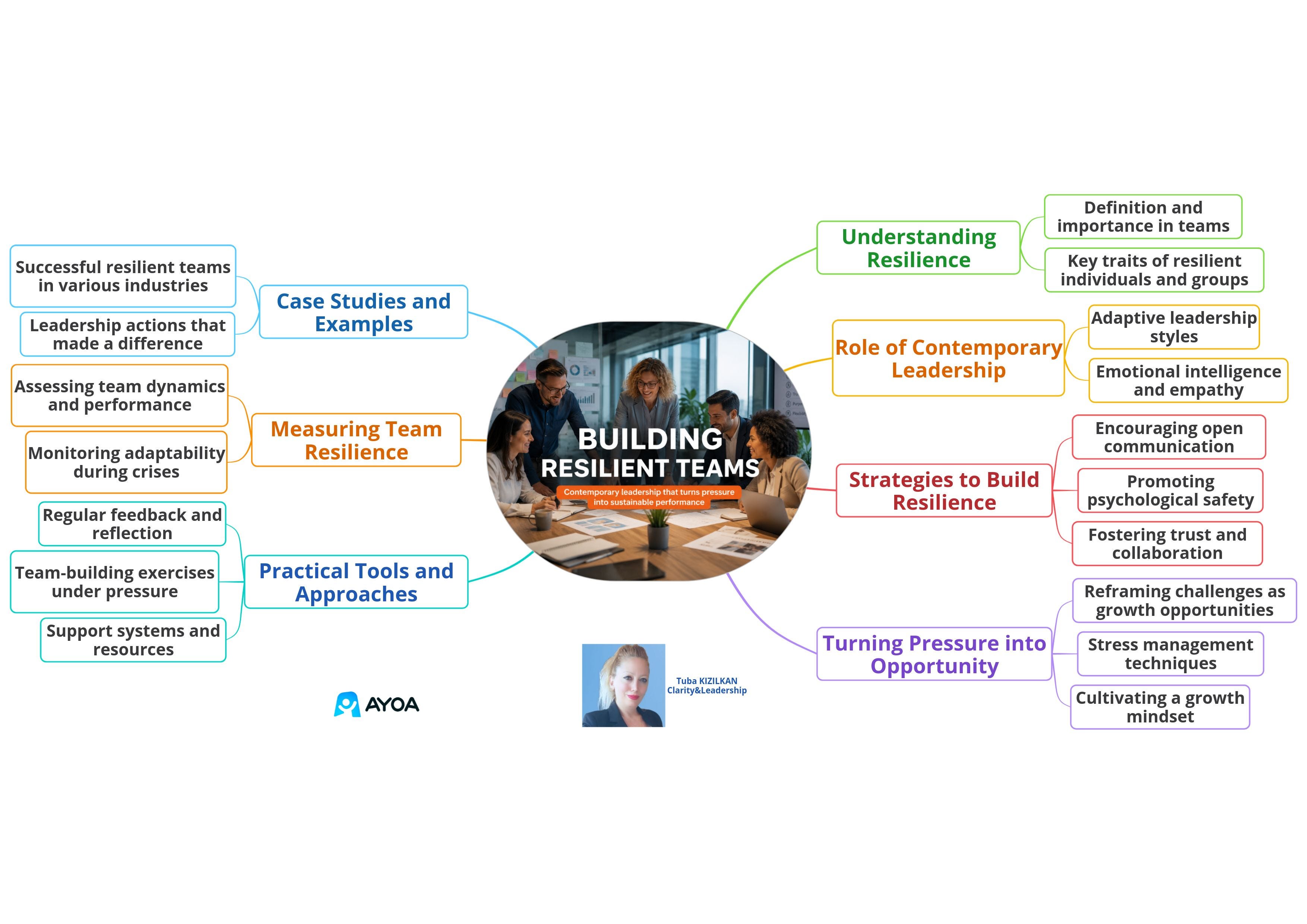
𝗕𝗨𝗜𝗟𝗗𝗜𝗡𝗚 𝗥𝗘𝗦𝗜𝗟𝗜𝗘𝗡𝗧 𝗧𝗘𝗔𝗠𝗦 𝗜𝗡 𝗔𝗡 𝗘𝗥𝗔 𝗢𝗙 𝗖𝗢𝗡𝗦𝗧𝗔𝗡𝗧 𝗣𝗥𝗘𝗦𝗦𝗨𝗥𝗘
𝗪𝗵𝘆 𝗰𝗼𝗻𝘁𝗲𝗺𝗽𝗼𝗿𝗮𝗿𝘆 𝗹𝗲𝗮𝗱𝗲𝗿𝘀𝗵𝗶𝗽 𝗶𝘀 𝘀𝗵𝗶𝗳𝘁𝗶𝗻𝗴 𝗳𝗿𝗼𝗺 𝗱𝗲𝗺𝗮𝗻𝗱𝗶𝗻𝗴 𝘁𝗼𝘂𝗴𝗵𝗻𝗲𝘀𝘀 𝘁𝗼 𝗱𝗲𝘀𝗶𝗴𝗻𝗶𝗻𝗴 𝗰𝗼𝗻𝗱𝗶𝘁𝗶𝗼𝗻𝘀 𝗶𝗻 𝘄𝗵𝗶𝗰𝗵 𝗽𝗲𝗼𝗽𝗹𝗲 𝗰𝗮

For years, resilience was treated as an individual quality.
Some people were described as strong.
Others were told to become tougher.
Employees were encouraged to manage stress, stay positive, adapt quickly, and keep going.
But this view is no longer sufficient.
A team cannot meditate its way out of poor leadership.
It cannot recover from unclear priorities while new demands continue to arrive.
It cannot remain psychologically strong in a culture where mistakes are punished, concerns are silenced, and exhaustion is mistaken for commitment.
This is why contemporary leadership is beginning to approach resilience differently.
Resilience is no longer only about how individuals respond to pressure.
It is also about how leaders design pressure, distribute responsibility, create safety, support recovery, and remove unnecessary friction from the system.
The question is changing.
It is no longer simply:
How resilient are our people?
The better question is:
What kind of working environment are we asking our people to be resilient inside?
That shift changes everything.
𝗥𝗲𝘀𝗶𝗹𝗶𝗲𝗻𝗰𝗲 𝗶𝘀 𝗻𝗼𝘁 𝗲𝗻𝗱𝗹𝗲𝘀𝘀 𝗲𝗻𝗱𝘂𝗿𝗮𝗻𝗰𝗲
Resilience is often confused with the ability to tolerate increasing levels of difficulty.
But endurance without recovery is not resilience.
It is depletion.
A resilient team is not one that accepts every demand without objection.
It is one that can face difficulty, adapt intelligently, recover capacity, learn from disruption, and return with greater clarity.
This distinction matters because some organizations unintentionally reward unhealthy behaviour.
The employee who answers messages at midnight is praised as committed.
The team that absorbs another urgent project is called agile.
The manager who never switches off is described as dependable.
But permanent availability is not evidence of resilience.
It is often evidence that the system has stopped protecting people.
Contemporary leadership must therefore separate productive pressure from destructive overload.
Pressure can improve focus.
It can create urgency.
It can reveal capability.
It can encourage growth.
But pressure only remains productive when people have sufficient autonomy, clarity, resources, and time to recover.
The leader’s role is not to eliminate every challenge.
It is to prevent challenge from becoming chronic instability.
𝗗𝗲𝘀𝗶𝗴𝗻 𝗵𝗲𝗮𝗹𝘁𝗵𝘆 𝗽𝗿𝗲𝘀𝘀𝘂𝗿𝗲
Strong leaders do not protect teams from every difficult assignment.
They create challenges that stretch people without making success structurally impossible.
Healthy pressure has a purpose.
It is connected to a clear outcome.
Responsibilities are understandable.
Resources are realistic.
Priorities do not change every few hours.
People know what good performance looks like.
Unhealthy pressure is different.
It is vague.
It is constant.
It comes from conflicting priorities, unnecessary urgency, poor planning, and emotional unpredictability.
When every task is urgent, the problem is rarely employee resilience.
It is usually leadership design.
A contemporary leader must therefore ask:
Is this challenge helping the team grow?
Or are we simply transferring organizational confusion onto individuals?
That question requires honesty.
𝗠𝗮𝗸𝗲 𝗿𝗲𝗰𝗼𝘃𝗲𝗿𝘆 𝗽𝗮𝗿𝘁 𝗼𝗳 𝗽𝗲𝗿𝗳𝗼𝗿𝗺𝗮𝗻𝗰𝗲
Many organizations treat recovery as something that happens outside work.
Employees are expected to restore themselves in the evening, over the weekend, or during annual leave.
Then they return to the same system that exhausted them.
This is not sustainable.
Recovery must become part of how performance is designed.
That does not mean lowering standards.
It means recognizing that concentration, judgment, creativity, and emotional regulation depend on energy.
A team that never pauses does not become faster forever.
It eventually becomes less accurate, less curious, less patient, and less able to notice risk.
Leaders can support recovery through practical decisions:
avoiding unnecessary meetings,
protecting focus time,
allowing periods of lower intensity after major deadlines,
creating realistic workloads,
respecting boundaries,
and refusing to glorify permanent exhaustion.
Rest is not the opposite of performance.
It is one of its conditions.
𝗕𝘂𝗶𝗹𝗱 𝗽𝘀𝘆𝗰𝗵𝗼𝗹𝗼𝗴𝗶𝗰𝗮𝗹 𝘀𝗮𝗳𝗲𝘁𝘆
Teams cannot become resilient if people are afraid to reveal problems.
When employees fear humiliation, punishment, or reputational damage, they do not stop seeing risks.
They stop reporting them.
That silence is dangerous.
Mistakes remain hidden.
Weak signals are ignored.
Concerns surface too late.
Ideas remain unspoken.
Psychological safety does not mean that every idea is accepted or that performance standards disappear.
It means people can ask questions, acknowledge uncertainty, admit mistakes, and challenge assumptions without being personally diminished.
Leaders build this safety through their responses.
When someone raises a concern, does the leader become defensive?
When a mistake happens, does the conversation focus on learning or blame?
When a junior employee challenges an assumption, is curiosity encouraged or status protected?
The answers teach the team what is truly safe.
A leader’s reaction to uncomfortable information is often more influential than any official statement about openness.
𝗖𝗵𝗮𝗹𝗹𝗲𝗻𝗴𝗲 𝗮𝘀𝘀𝘂𝗺𝗽𝘁𝗶𝗼𝗻𝘀 𝗲𝗮𝗿𝗹𝘆
Pressure narrows attention.
When teams become stressed, they tend to rely on familiar interpretations.
They search for certainty.
They protect existing beliefs.
They may identify a person to blame because blame feels simpler than complexity.
Contemporary leaders must interrupt this narrowing.
Instead of immediately asking, “Who caused this?” they can ask:
What are we assuming?
What information are we missing?
What has changed since this decision was made?
What would someone outside the team notice?
What explanation have we not considered?
These questions reopen the thinking field.
They replace emotional certainty with investigation.
Resilient teams do not avoid incorrect assumptions.
They detect and revise them before those assumptions become expensive decisions.
𝗥𝗲𝗰𝗼𝗴𝗻𝗶𝘇𝗲 𝗽𝗿𝗼𝗴𝗿𝗲𝘀𝘀, 𝗻𝗼𝘁 𝗼𝗻𝗹𝘆 𝗳𝗶𝗻𝗮𝗹 𝗿𝗲𝘀𝘂𝗹𝘁𝘀
Teams need evidence that their effort is producing movement.
When leaders recognize only major outcomes, long periods of difficult work can feel invisible.
This weakens motivation.
Recognition should therefore include progress:
a risk detected early,
a difficult conversation handled well,
a process improved,
a colleague supported,
a lesson applied,
or a small milestone reached.
This does not mean celebrating every ordinary task.
It means helping people see that meaningful effort is being noticed.
Progress recognition strengthens resilience because it gives teams evidence that they are capable of influencing outcomes.
It turns effort into visible momentum.
𝗟𝗲𝗮𝗱 𝘄𝗶𝘁𝗵 𝗮𝗽𝗽𝗿𝗲𝗰𝗶𝗮𝘁𝗶𝗼𝗻
Appreciation is sometimes dismissed as soft leadership.
It is not.
It is one of the ways leaders communicate value.
People can usually sense whether they are viewed as contributors or merely as capacity.
When respect appears only after exceptional performance, the relationship becomes transactional.
When appreciation is integrated into daily leadership, people are more likely to experience belonging and meaning.
Effective appreciation is specific.
Instead of saying, “Good job,” a leader can say:
“The way you raised that concern early prevented a larger problem.”
“You created clarity when the team was becoming confused.”
“You supported your colleague without losing focus on the outcome.”
Specific appreciation teaches the team which behaviours matter.
It strengthens culture while recognizing the individual.
𝗦𝘁𝗿𝗲𝗻𝗴𝘁𝗵𝗲𝗻 𝘁𝗲𝗮𝗺 𝗰𝗼𝗻𝗻𝗲𝗰𝘁𝗶𝗼𝗻𝘀
Resilience is not only stored inside individuals.
It exists in relationships.
Teams become stronger when members know whom to approach, trust one another’s intentions, and exchange support before a problem becomes a crisis.
This requires more than occasional team-building activities.
Connection grows through repeated, reliable interactions.
Regular conversations.
Shared reflection.
Honest feedback.
Peer learning.
Visible help.
Mutual accountability.
Leaders should not become the only source of support.
That creates dependency and overloads the leader.
Instead, they should strengthen the network inside the team.
The goal is not simply to create friendly colleagues.
It is to build a team capable of coordinating under pressure.
𝗖𝗿𝗲𝗮𝘁𝗲 𝘀𝘆𝘀𝘁𝗲𝗺𝘀 𝘁𝗵𝗮𝘁 𝘀𝘂𝗽𝗽𝗼𝗿𝘁 𝗽𝗲𝗼𝗽𝗹𝗲
One of the most important contemporary leadership shifts is the movement from individual correction to system examination.
When the same problem repeatedly affects different people, the problem may not be motivation.
It may be the process.
When deadlines are repeatedly missed, leaders should not only ask people to work harder.
They should examine planning, decision delays, ownership, tools, dependencies, and changing priorities.
When meetings consume the working day, the answer is not another time-management course.
It may be a redesign of communication.
When employees hesitate to act, the issue may not be confidence.
Decision authority may be unclear.
Resilient organizations reduce unnecessary friction.
They make the desired behaviour easier.
They build processes that support good judgment rather than constantly demanding heroic effort.
This is where leadership and management must meet.
Leadership establishes the human and strategic direction.
Management turns that direction into systems, rhythms, responsibilities, and working practices.
𝗧𝗵𝗲 𝗻𝗲𝘄 𝗹𝗲𝗮𝗱𝗲𝗿𝘀𝗵𝗶𝗽 𝗾𝘂𝗲𝘀𝘁𝗶𝗼𝗻
The contemporary leader is no longer judged only by how well they perform under pressure.
They are also judged by the kind of pressure they create for others.
Do they produce clarity or confusion?
Do they build capacity or dependency?
Do they reward learning or protect appearances?
Do they recognize effort only when results are spectacular?
Do they treat recovery as weakness?
Do they ask individuals to compensate for broken systems?
These questions reveal the real architecture of leadership.
Resilient teams are not created through motivational language.
They are built through repeated leadership choices.
How pressure is designed.
How mistakes are treated.
How people recover.
How progress is recognized.
How relationships are strengthened.
How systems are improved.
The strongest leaders do not simply ask people to become more resilient.
They create an environment in which resilience can grow.
That is not softer leadership.
It is more intelligent leadership.